


Ways to keep a Southend home office cool in summer

For keeping a home office cool in summer in Southend, shade windows that get direct sun and keep them closed while the outdoor air is warmer than indoors. Open them for ventilation when outside air is cooler, then close them again as temperatures rise.
A comfortable workspace depends on how heat enters your home and how you use the room. A routine that works for a shaded office may be less effective in a room with strong afternoon sun. Notice how conditions change rather than relying on one setting all day. Small adjustments can make hot spells easier to manage.
This guide explains when to shade windows or ventilate, and how to limit heat building up indoors. You’ll also find practical ways to manage hot weather around your working day, plus guidance on what to consider if simple measures aren’t enough. The aim is a more usable home office, with clear steps you can adapt as conditions change.
Table of Contents
1. Closing sun-facing windows and curtains during the day
Keeping a home office cool in summer in Southend: shade the glass
To reduce heat from windows in a Southend home office, close sun-facing windows and cover the glass before direct sunlight reaches your desk. The NHS advises trying to stay out of the sun between 11am and 3pm, when UV rays are strongest. Use that period as a prompt to check which windows need shading during your working day.
Blackout blinds block direct light, while reflective window film reduces sunlight passing through the glass. Curtains and shutters can help too. Close them across the bright window, without leaving gaps where sunlight can fall on your desk or screen. If the office has windows on more than one wall, shade each one receiving direct sun.
Choose a covering that suits how you use the room. A blackout blind can reduce screen glare, while curtains may be easier to draw across a wide window. Shutters let you adjust the incoming light, but close them when the sun shines directly through. Reflective film stays on the glass, so consider whether you want it there beyond summer.
Check the office as the sun moves. A window shaded in the morning, for example, may become bright later. Adjust its blind before sunlight reaches your chair. Keep the covering closed while direct sun falls on the window, then open it when the sun has moved away if you want more daylight.
These steps limit solar heat entering the room, but some offices are harder to cool than others. Large glazed areas, a bright south-facing aspect and limited shading can all affect how quickly a workspace warms. Notice which window brings in the most heat, then prioritise it when arranging curtains, blinds or shutters.
2. Ventilating the home when outdoor air is cooler
Open your home-office windows when the outdoor air is cooler than indoors. Early morning can be a useful time, before the day warms up. If your Southend home has windows on opposite sides, opening both can create a cross-breeze and help cooler air move through. Leaving just one window open may not clear warm air as effectively.
Compare indoor and outdoor temperatures before opening the windows. A simple thermometer in the office gives you a reading to compare with the outdoor air. If outside is warmer, keep the windows closed and wait for conditions to change. Once the office has aired, close the windows if the outdoor temperature rises. This gives you a practical routine instead of relying only on how the room feels.
If your home becomes uncomfortably hot, consider working for a while in a cooler public space. Libraries, shopping centres and supermarkets may offer cooler surroundings. Local authorities may also identify cool spaces during hot weather. If children are at home, plan where they can spend time away from rooms that become especially warm.
A fan moves air around you, while a portable air conditioner cools a room and usually vents through a window hose. Portable units can be louder and less efficient than fixed split systems. Air coolers use a different approach, so compare how each type works before choosing. No portable model suits every home office; room size, heat entering through windows and where a hose can vent all affect the choice. UK purchase prices vary by model and features, so avoid assuming one figure applies to every unit.
There is no single indoor reading that tells everyone when a room is too hot. Rising temperatures can affect concentration, and overheating can worsen existing heart or breathing problems. The NHS identifies dehydration as a heatwave risk, so drink regularly. Workplace temperature guidance for home working should focus on keeping conditions reasonable and reducing heat, rather than relying on one universal maximum. In Southend-on-Sea, check local-authority information for any identified cool spaces; libraries and other public venues may provide a cooler place to work.
3. Closing doors and windows during the hottest part of the day
Open windows and blinds when outside air is cooler, such as in the morning. Close them again as the outdoor air warms, especially during the hottest part of the day, usually between 2pm and 5pm. Shut the home-office door too, so warmer air from other rooms doesn’t drift into your workspace.
Before afternoon heat builds, check which windows receive direct sun and shade them. Awnings, exterior shutters or a shade canopy can block sunlight before it reaches the glass. Temporary outdoor shade over a bright office window can also reduce direct sun entering the room. Secure the covering and keep it clear of any opening window.
If external shading isn’t practical, use a temporary screen outside the window or close indoor blinds and curtains before sunlight reaches your desk. A light-coloured sheet fixed across the outside can provide shade, but don’t obstruct ventilation when cooler air returns. Choose a method suited to the window that can be removed safely.
During a hot Southend afternoon, keep doors to warmer rooms closed and avoid repeatedly opening the office window. Each opening can let hotter air in, undoing the cooling gained earlier. Close the door behind you when leaving the room. Reopen the windows when outdoor air becomes cooler than indoors, ventilate briefly, then close them again as temperatures rise.
These steps can help limit overheating, but don’t replace attention to health. Heat exhaustion and heatstroke are serious conditions, and people more vulnerable to heat may need extra care. If someone feels unwell, stop work and move them to a cooler space. Keep the office shaded and the door closed while it is warmer than the rest of the home.
4. Keeping a home cool during hot weather
Consider heat sources across your whole working day, not just at the warmest moment. A desktop computer, monitor and printer can all add warmth to a compact office. Switch equipment off when it isn’t needed, and avoid leaving chargers plugged in beside your desk. During a lunch break, shut down devices rather than leaving them running unattended.
Make a simple room-by-room plan before a hot spell. Identify spaces that gain heat from cooking, laundry or electronics, then avoid bringing those heat sources into your workspace. Run the dishwasher or washing machine at a cooler time and prepare meals that don’t need the oven or hob. This helps stop household routines adding warmth while you work.
Review your desk setup for comfort as well as temperature. Keep the route between your chair and doorway clear so you can move easily between the office and a cooler part of the home. Store paperwork and equipment away from radiators and other heat-producing devices. If you use several monitors, switch off the spare screen for tasks that need only one.
Keep water within reach and take regular breaks from concentrated work. If your office feels stuffy, step away and reassess the room before continuing. People sweating heavily may consider rehydration drinks to replace lost electrolytes. Heat exhaustion and heatstroke can be serious, so act promptly if someone feels unwell.
When everyday adjustments aren’t enough, consider whether a fixed cooling system would make the room more usable. A home-office system can be planned around the room’s layout, glazing and how you work, rather than relying on temporary changes each time hot weather arrives.
Essex Home Air Conditioning: Air conditioning installation
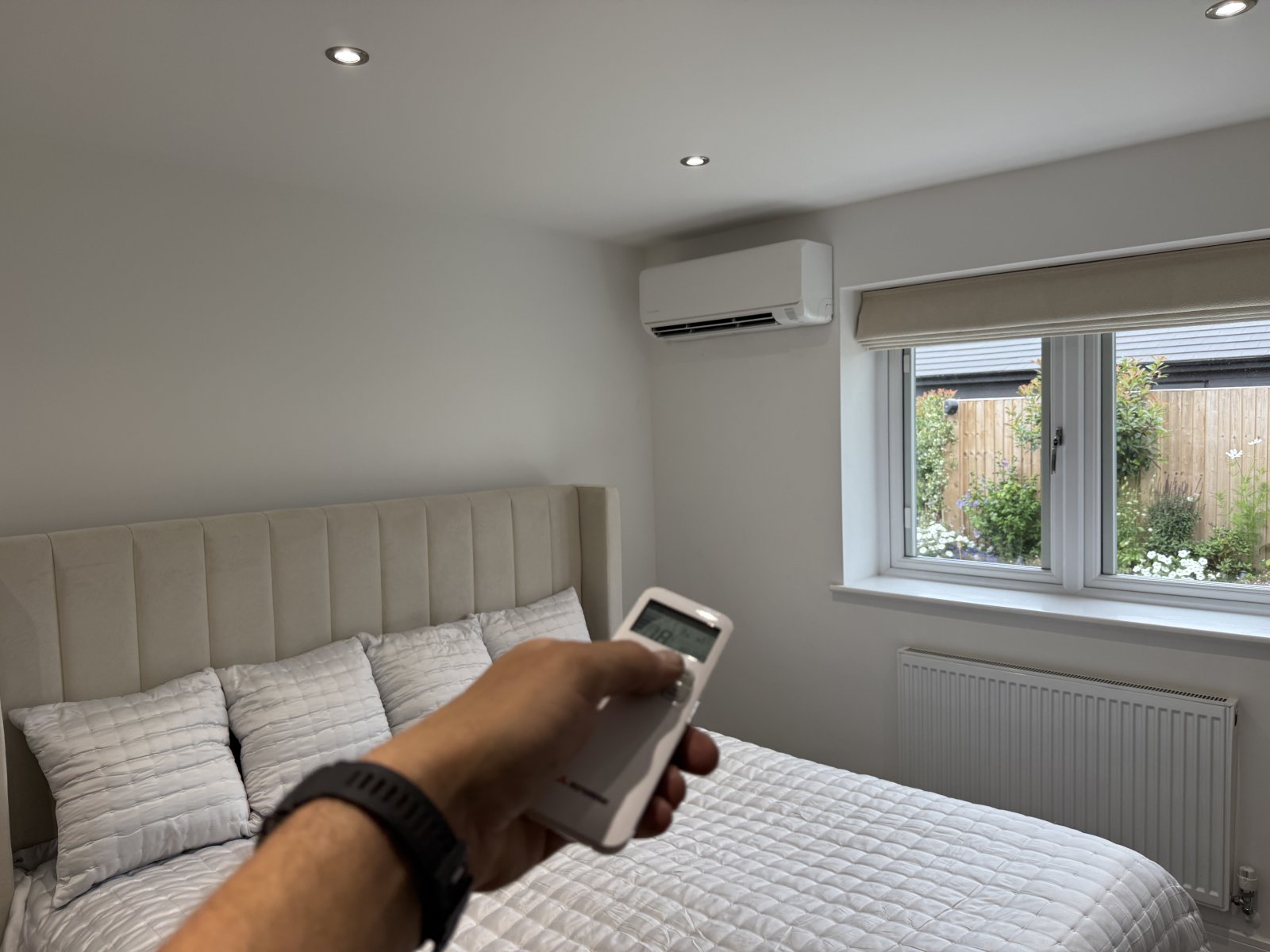
Essex Home Air Conditioning installs home air conditioning for Southend homeowners who need more dependable cooling than shading and ventilation alone can provide. A wall-mounted split system can serve a dedicated office, while a multi-room setup may suit homes where several spaces need cooling.
Modern split air conditioning can also provide heating, making it useful beyond summer. The right system depends on the room’s volume, glazing, insulation, orientation, occupancy and heat load, not just floor area. Indoor and outdoor unit positions matter too, especially in a home office where comfort and a tidy finish are priorities.
If you’re considering a fixed system, share details about your workspace and how you want it to work. Essex Home Air Conditioning can discuss installation options for your Southend home and provide a same-day free quote.
Plan a more comfortable workspace for next summer
Use your experience of working through a hot spell to decide what would make the biggest difference next time. Note when the office becomes uncomfortable, where sunlight falls and which equipment adds heat. These details can help you decide whether room adjustments or a fixed cooling system would better suit your routine.
For keeping a home office cool in summer in Southend, match the solution to how you use the space, not just how it feels on a warm afternoon. Consider your desk position, working hours and which parts of the home need attention. A well-planned workspace can make hot days easier to manage.
To discuss a practical cooling option for your home, contact Essex Home Air Conditioning for a same-day free quote.
A cooler, more comfortable home office is a sensible goal to plan for.
Frequently Asked Questions
Are there more heatwaves than there used to be?
England is expected to experience heatwaves that are more intense, last longer and happen more often in the future. Planning for hot spells before they arrive can be more useful than relying on a last-minute fix. Check weather updates and prepare your workspace, drinking water and household routine when hot weather is forecast.
How much does it cost to run?
Running costs depend on the appliance, how long it operates, its settings and your electricity tariff. An average electric fan costs around 3p per hour, but that figure doesn’t apply to air conditioning. For a cooling system, usage patterns and the room’s heat load affect electricity use. Regular servicing can help maintain system performance.
How can I keep cool when it’s hot?
Drink fluids throughout the day instead of waiting until you feel thirsty, and choose loose, light-coloured clothing made from breathable fabric such as cotton or linen. If you feel overheated, cool your skin with water or place a cold pack wrapped in cloth on your neck. Take breaks from strenuous tasks during the hottest conditions.
Is air conditioning worth it for a home office?
A fixed system may be worthwhile if hot conditions regularly make your home office uncomfortable or difficult to use. It gives you a dedicated cooling option for that room, while modern split air conditioning can also provide heating. Homeowners in Southend, Basildon, Benfleet, Rayleigh, Canvey Island, Wickford, Billericay, Brentwood, Leigh-on-Sea, Maldon, Chelmsford, Burnham and Grays can discuss a system designed for their home with Essex Home Air Conditioning.
What ventilation strategies help cool a home office during a UK heatwave?
Use a thermometer to compare the office with the outdoor air rather than relying only on a forecast or how the air feels. If outside is cooler, open windows to encourage airflow, keeping the route between them clear of furniture. Close them again once outdoor air becomes warmer. This helps prevent extra heat entering during a hot spell.

Comments