


Quiet Air Conditioning: 2026 Guide to Silent Sleep

Would you invite a kitchen extractor fan into your bedroom at 2 a.m.? For many homeowners across Essex, the search for quiet air conditioning for bedrooms often ends in frustration. You might think that cooling your home always requires a noisy trade-off, but you shouldn't have to choose between a sweltering room and a mechanical roar that keeps you awake. We understand that a peaceful night is just as important as a cool one.
We agree that your sleep is sacred and shouldn't be interrupted by clunky, rattling machinery. This guide will show you how to achieve a perfectly chilled, silent sanctuary using the latest ultra-quiet fixed technology. You'll discover how 2026 flagship models now operate at a whisper-quiet 18dB; that's lower than the sound of rustling leaves. We'll also explain why a tidy, professional installation by an F-Gas certified specialist is the only way to ensure your system stays silent. From understanding decibel ratings to selecting the right unit for your home in Brentwood or Billericay, here is everything you need for a better night's rest.
Table of Contents
Understanding Decibel Levels for a Perfect Night’s Sleep
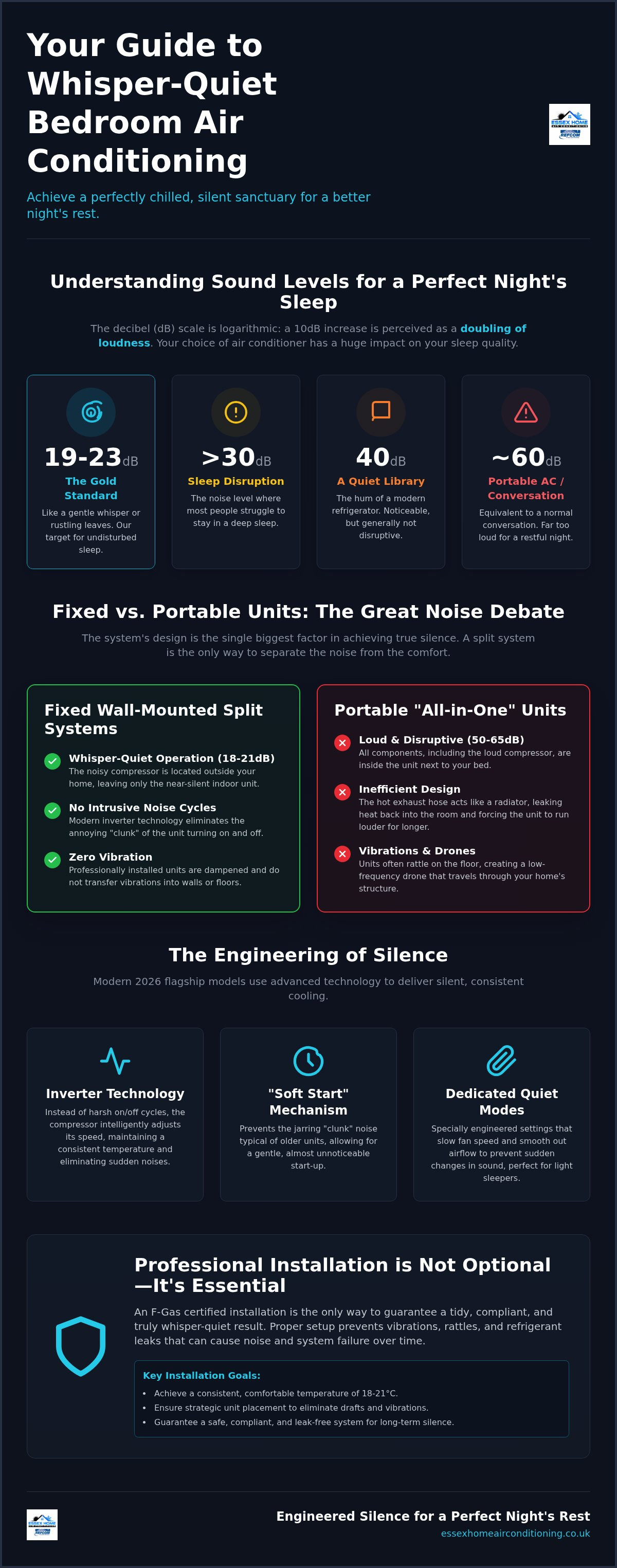
When the summer sun sets during a humid July night, the silence of your bedroom becomes your most valuable asset. To understand how to keep it that way, we first need to look at the decibel (dB) scale. Unlike a ruler where ten centimetres is twice as long as five, the decibel scale is logarithmic. This means that a small change in the number represents a massive leap in what you actually hear. Most experts agree that for the human ear, a 10dB increase is perceived as a doubling of loudness. If you choose the wrong system, you aren't just getting a bit of background hum; you're effectively doubling the noise in your sanctuary every time you move up a tier.
For homeowners seeking quiet air conditioning for bedrooms, Understanding Noise Control is the first step toward a restful night. It's about more than just the volume; it's about the frequency and the "quality" of the sound. We focus on the "Gold Standard" for bedroom cooling, which sits between 19dB and 23dB. To put these numbers into perspective, let's look at how common household noises compare to modern 2026 air conditioning technology:
19dB to 23dB: A gentle whisper or rustling leaves (Our target for a silent sleep).
40dB: A modern refrigerator hum or a quiet library.
60dB: A typical portable air conditioning unit or a normal conversation.
What Noise Level is Actually Sleep-Friendly?
Research into sleep disturbance suggests that most people struggle to stay in a deep sleep once background noise exceeds 30dB. Whilst a steady, low-level hum can sometimes act as white noise, the intrusive "clunk" of an old compressor or a cheap portable unit is a guaranteed wake-up call. In Essex, where our homes are often closely packed in towns like Leigh-on-Sea, keeping the noise down isn't just for your benefit; it's for your neighbours too. We aim for 19dB because it sits comfortably below the threshold of conscious hearing for most light sleepers.
The Psychology of Sound in the Master Bedroom
Intermittent noises are the real enemies of rest. They disrupt your REM cycles, leaving you feeling groggy despite "sleeping" for eight hours. Modern 2026 units feature dedicated "Quiet Mode" settings that slow the fan speed and smooth out the airflow to prevent sudden changes in sound. Picture your bedroom after a professional installation. It's a consistent 18-21°C. The air is fresh. The only thing you can hear amongst the stillness is your own breathing. That's the result of choosing engineered silence over a quick, noisy fix.
Fixed Wall-Mounted vs. Portable Units: The Great Noise Debate
If you've ever tried to sleep with a portable air conditioner in the room, you'll know it's like trying to nap next to a running kitchen appliance. The fundamental design flaw of a portable unit is that every single component, including the noisy compressor, is housed inside the box sitting right next to your bed. There's no escape from the mechanical hum. When we talk about quiet air conditioning for bedrooms, we're really talking about a split system that separates the heavy lifting from the quiet delivery. This design choice is the only way to achieve true silence.
Excessive noise isn't just an annoyance; it's a genuine health concern that impacts your quality of rest. Whilst the Noise Control Act of 1972 was established in the U.S. to address these very issues, the principles of protecting human welfare from noise pollution apply just as much to our bedrooms in Southend-on-Sea. Fixed units are engineered to be dampened, meaning they don't transfer vibrations into your floorboards. In contrast, portable units often rattle across the floor as they run, creating a low-frequency drone that travels through the structure of your home.
Why Portables Fail the Bedroom Test
Portable units are inherently inefficient and loud. They rely on a thick exhaust hose that you have to poke through a window. This hose gets incredibly hot, acting like a radiator that leaks heat back into the room you're trying to cool. This forces the unit to work harder and louder for longer periods. In 2026, even the "quietest" portable models still average between 50dB and 65dB. Compare that to a fixed unit at 19dB, and the difference is staggering. You also have the midnight chore of emptying water trays, which is hardly conducive to a deep sleep.
The Silence of the Split System
A wall-mounted split system is the gold standard for a reason. The indoor unit focuses purely on distributing chilled air through a whisper-quiet fan. All the noisy parts, the compressor and the condenser fan, are located on an external wall outside your house. This moves the "hum" away from your pillow and into the open air. Because these systems use inverter technology, they are also significantly cheaper to run than portables, as they don't have to work nearly as hard to maintain a steady temperature.
For a deeper look at how these systems integrate into your home, see our Wall Mounted Air Conditioning for Homes: 2026 Guide. If you're ready to ditch the rattle of a portable unit, you can chat with us about a tidy installation that puts silence first.
The Engineering of Silence: Inverter Technology and Sleep Modes
Achieving quiet air conditioning for bedrooms isn't just about turning the fan down. It requires sophisticated internal engineering. In older systems, the compressor was either 100% on or 100% off. This led to a cycle of loud mechanical clunks and sudden surges of cold air. Modern 2026 units use Inverter Technology, which acts more like a dimmer switch for your cooling. Instead of stopping completely, the motor simply slows down once your room reaches the desired temperature. This eliminates the acoustic "drama" of a system constantly kicking back into life.
A key part of this process is the "Soft Start" mechanism. This feature ensures the system powers up gradually, avoiding that midnight jolt of noise that can startle a light sleeper. Manufacturers have even looked to nature for inspiration; many modern fan blades now feature aerodynamic ridges inspired by the silent flight of owl wings. This design reduces air turbulence, allowing the unit to move more air with significantly less sound. These advancements are a major reason why current Energy Efficiency Standards for Air Conditioners often go hand-in-hand with quieter operation; a more efficient motor is naturally a more peaceful one.
Variable Speed: The Secret to Constant Quiet
Because an inverter motor doesn't stop and start, it maintains a remarkably stable climate. There's no "hunting" for the right temperature. This leads to a much more relaxing environment where the background noise remains at a constant, barely perceptible level. It's the difference between a car cruising at a steady speed on the A12 and one constantly stopping and starting in Southend traffic. For the homeowner, this means better energy ratings and a much higher chance of staying in a deep REM cycle throughout the night.
Smart Sensors and Airflow Direction
Modern units also use intelligence to keep things quiet. Many flagship 2026 models include human presence sensors. These can detect where you are in the bed and direct the "Indirect Airflow" away from you. This prevents that annoying feeling of a cold draught on your face whilst also reducing the wind noise associated with direct blowing. You can even customise these settings via smartphone apps before you go to bed. By setting a bespoke sleep climate, you ensure the unit enters its quietest mode exactly when you need it to, gradually raising the temperature by a degree or two in the early hours to match your body's natural rhythm.
Strategic Placement: Where to Install for Minimum Disturbance
Selecting the quietest model is only half the battle. Where you choose to mount the unit within your room significantly impacts your actual experience of the sound. For quiet air conditioning for bedrooms to work effectively, the unit needs to be positioned where its airflow can circulate without bouncing directly off hard surfaces or blowing straight onto your face. We often see homeowners debating between placing the unit over the door or opposite the bed. In most Essex master bedrooms, over the door is the winner. It keeps the unit out of your direct line of sight and allows the air to move across the room naturally.
You should never install an indoor unit directly above your headboard. Even with a whisper-quiet 19dB rating, being inches away from the internal components means you might hear the faint sound of refrigerant moving through the pipes. Mounting on a solid internal or external wall is also essential. Stud walls can sometimes act like a drum, amplifying tiny vibrations into a low-frequency hum. Our team ensures every installation uses tidy trunking. This isn't just for aesthetics; properly secured pipework prevents the "whistling" or rattling that can occur if lines are left loose or poorly routed.
Optimising Airflow Patterns
An air conditioner needs "breathing room" to operate at its lowest decibel setting. If a unit is tucked too tightly into a corner or too close to the ceiling, the fan has to work harder to pull in air, which increases the noise. This is particularly important for loft conversions in Brentwood or rooms with vaulted ceilings where sound tends to travel and echo more easily. If you are considering cooling multiple areas, our guide on Multi-room Air Conditioning in Basildon provides more detail on balancing airflow across different floor plans.
Managing the Outdoor Unit
The placement of the outdoor condenser is just as vital for your peace of mind. We always aim to place the external unit away from bedroom windows to prevent "structural hum" from entering the house. In 2026, UK regulations like the MCS 020 standard mandate a maximum noise limit of 37dB at your neighbour's nearest window. We use anti-vibration mounts as standard to ensure your neighbours in Chelmsford stay just as happy with the system as you are. This methodical approach to placement ensures you comply with local Essex planning constraints whilst enjoying a silent home. If you want to ensure your system is positioned for maximum silence, you can book a site survey with our local Essex team to discuss the best layout for your home.
Professional Installation in Essex: Ensuring Long-Term Quiet Performance
You can buy the most expensive, top-tier unit on the market, but if it isn't installed correctly, it won't be silent. Achieving quiet air conditioning for bedrooms relies heavily on the technical precision of the person holding the tools. In the UK, an F-Gas certified installer is a legal requirement for any split-system installation. This isn't just about paperwork or safety; it's about performance. A system that hasn't been balanced or secured properly will vibrate, rattle, and eventually fail. We take a methodical, jargon-free approach to every job, ensuring your system is in a "safe pair of hands" from the moment we start.
One of the most common causes of noise in a new system is a "gurgling" sound within the refrigerant lines. This happens when an installer fails to properly vacuum the pipes before commissioning the unit. We use professional-grade vacuum pumps to remove every trace of air and moisture from the lines. This ensures the refrigerant flows smoothly and silently. Because we are local specialists based in Essex, we care deeply about our reputation in towns like Maldon and Southend. We don't just drop a box and disappear; we ensure the system is whisper-quiet for the long term.
The Importance of a Tidy Finish
Your bedroom should remain a sanctuary, not a construction site. We use premium trunking to house all pipework and cables, ensuring a clean, professional look that blends into your décor. Our "no-mess" guarantee means we use dust extraction during any drilling and leave your home exactly as we found it. We believe in doing things the "Right Way" rather than cutting corners with cheap materials. This attention to detail prevents loose components from becoming a source of noise as the building settles or the weather changes.
Ongoing Servicing for Silent Operation
Even the quietest system needs a little care to stay that way. Over time, dust and allergens build up on the internal filters. This forces the fans to work harder, often resulting in a high-pitched "whining" sound or a laboured hum. For properties near the Southend coast, salt air and fine sand can also impact the outdoor unit. Annual maintenance is the best way to keep your system running at that magic 19dB level. If you're ready to transform your sleep, you can book your free bedroom survey with the Essex Home Air Conditioning team today. We'll help you choose the right system and the perfect, tidy placement for a silent night's rest.
Secure Your Silent Sleep Sanctuary
Achieving a peaceful night's rest in a cool room shouldn't be a luxury. As we have explored, the secret to quiet air conditioning for bedrooms lies in moving the noisy components outside and using advanced inverter technology to maintain a steady, whisper-quiet climate. By choosing a fixed wall-mounted system over a clunky portable unit, you can enjoy temperatures between 18-21°C without the disruptive mechanical roar. You no longer have to choose between being too hot to sleep or too distracted by noise to rest.
It's not just about the hardware; it's about the methodical approach to installation. Proper placement away from the headboard and an F-Gas compliant setup are essential to prevent unwanted vibrations or gurgling sounds. With over 20 years of trade experience, we specialise in tidy residential fittings that respect the aesthetics of your home. We understand that local accountability matters, which is why we focus on delivering high standards for our neighbours across the county. We take pride in being a safe pair of hands for your home improvement project.
If you're tired of heat-interrupted sleep and want a professional, no-nonsense solution, we're here to help. Request a Free Quiet Bedroom Survey in Essex today. Let's work together to create the perfectly chilled, silent sanctuary you deserve for a better night's sleep.
Frequently Asked Questions
Is air conditioning too noisy for a baby’s bedroom?
Modern quiet air conditioning for bedrooms is actually ideal for nurseries. At 19dB, these units are quieter than a whisper and far softer than most white noise machines parents use. They help maintain a consistent 18°C temperature, which is the gold standard for safe infant sleep. You'll find it provides a stable, peaceful environment that helps babies stay asleep longer during humid Essex nights.
How much does it cost to run a quiet bedroom air conditioner overnight in the UK?
Running costs are remarkably low thanks to 2026 inverter technology. Unlike old systems that guzzled power by constantly restarting, modern units simply slow down to maintain the temperature. Whilst exact electricity prices vary by provider, these systems are engineered for high efficiency. You're paying for a small amount of steady power rather than the expensive surges associated with older, fixed-speed appliances.
Can I install a quiet split system AC in a flat or apartment in Essex?
Yes, we regularly install split systems in flats across the county. You will typically need written permission from your freeholder or management company first. We specialise in tidy installations that use compact outdoor units, which can often be mounted on balconies or high on external walls. Our methodical approach ensures the pipework is hidden and the system remains compliant with building regulations.
Do I need planning permission for an outdoor air conditioning unit in Chelmsford?
In most cases, a single outdoor unit is considered "Permitted Development" and doesn't require a full planning application. As of 2026, the old rule requiring units to be one metre from the boundary has been removed. The focus is now on noise levels. We ensure your installation meets the MCS 020 standard, which limits noise to 37dB at your neighbour's nearest window.
What is the absolute quietest air conditioning unit available in 2026?
The Mitsubishi Electric MSZ-AY series is currently one of the quietest models on the UK market, operating at a record low of 18dB. Other flagship 2026 models, such as the Worcester Bosch Climate 3000i and the Daikin Stylish, operate at 19dB. These units are specifically engineered for bedrooms, using aerodynamic fans to move air without the turbulent "whooshing" sound of standard models.
Will a quiet AC unit also help with my hay fever and allergies?
Yes, modern bedroom units feature advanced filtration systems that catch pollen, dust, and fine particles. This is a significant benefit for hay fever sufferers in Southend, as you can keep your windows shut against the high pollen counts whilst still enjoying fresh, chilled air. It creates a clean air sanctuary that can significantly improve your quality of sleep during the spring and summer.
How long does a typical bedroom air conditioning installation take?
A standard installation for a single wall-mounted unit usually takes one working day. Our team arrives in the morning to handle the mounting, pipework, and electrical connections. We always perform a thorough vacuum of the system and a full test before we finish. We take pride in leaving your home tidy, so you can enjoy a cool, silent bedroom that very same evening.
What happens if the outdoor unit makes too much noise for my neighbours?
We prevent noise complaints by using anti-vibration mounts and following strict MCS 020 noise assessment guidelines. By calculating the sound path to the nearest neighbouring window before we start, we ensure the external unit stays within the legal 37dB limit. This professional, methodical approach protects your local reputation and ensures your cooling system doesn't become a nuisance to those living nearby.


Comments