


Home Air Conditioning Unit Maintenance: The Ultimate 2026 Homeowner’s Checklist
What if that faint, musty smell coming from your vents is actually a warning sign that your energy bills are about to spike? It's a common worry for many people across Essex. Most homeowners assume that if the air feels cold, their system is working perfectly. However, neglecting home air conditioning unit maintenance often leads to inefficient cooling and, eventually, a voided manufacturer’s warranty. You want a home that stays fresh and a system that doesn't let you down when the summer heat hits.
We understand that you want a reliable, tidy home without the stress of technical jargon or unexpected repair costs. This comprehensive 2026 guide is designed to give you total peace of mind. You'll discover the essential monthly DIY steps to keep your air quality high and your running costs low. We also clarify the legal requirements for professional servicing, ensuring your system remains safe and fully compliant with UK F-Gas regulations. From cleaning filters to understanding when to call in a certified engineer, here's everything you need to keep your cooling system in top shape for years to come.
Table of Contents
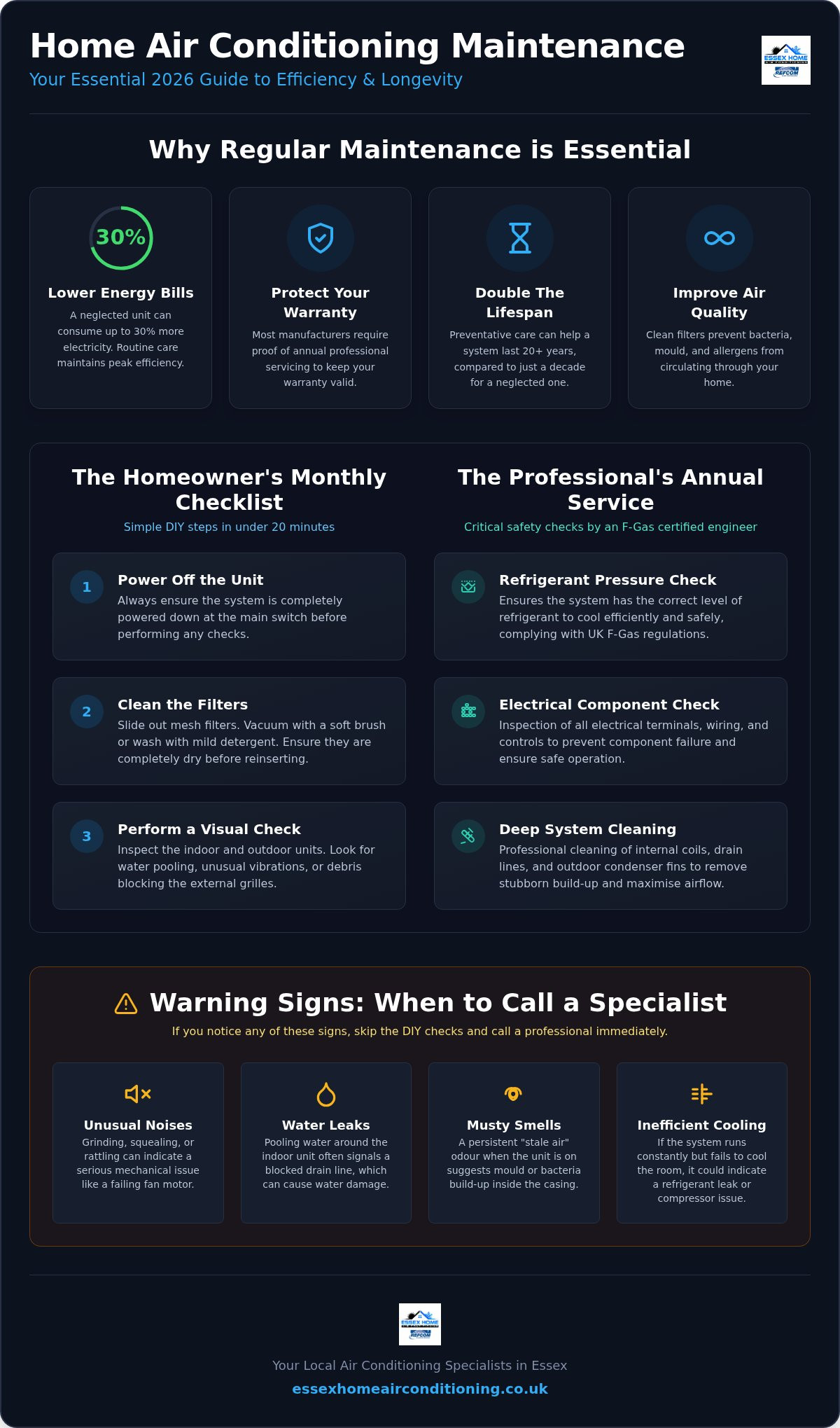
Why Maintenance is Essential for Your Essex Home Air Conditioning Unit
The Homeowner’s Monthly Maintenance Checklist: Simple DIY Steps
The Professional Maintenance Checklist: What an F-Gas Engineer Does
Warning Signs: When to Skip the Checklist and Call a Specialist
Organising Your 2026 Maintenance Plan with Essex Home Air Conditioning
Why Maintenance is Essential for Your Essex Home Air Conditioning Unit
Maintenance is often misunderstood as a luxury or an optional extra. In reality, home air conditioning unit maintenance is a disciplined combination of routine hygiene and technical calibration. It ensures your system operates exactly as the manufacturer intended. For homeowners across Essex, this methodical process is the difference between a system that lasts a decade and one that serves you for twenty years. It is about doing things the right way to ensure long-term comfort.
Beyond longevity, there is the matter of your paperwork. Most major brands require proof of an annual professional service to keep your manufacturer's warranty valid. Without this "safe pair of hands" approach, a simple component failure could result in a full out-of-pocket replacement cost. Efficiency plays a role too. A neglected, dirty unit can consume up to 30% more electricity to achieve the same cooling effect. By understanding how air conditioning works, you can see that any restriction in airflow forces the compressor to work overtime, driving up your monthly energy bills.
Living in Essex brings specific environmental challenges that generic guides often overlook. If you are near the coast in Southend or Basildon, salt-laden air can accelerate corrosion on your outdoor condenser fins. Further inland, rural properties face high seasonal pollen counts and agricultural dust that quickly clog external grilles. Localised care accounts for these factors, ensuring your outdoor unit remains clear and compliant.
The Link Between Hygiene and Air Quality
Internal filters are designed to trap dust and particulates, but when they become saturated, they can become a breeding ground for bacteria and mould. This often results in a distinct, musty "stale air" odour whenever the unit is switched on. For those suffering from hay fever or respiratory conditions, a clean system acts as a vital line of defence. Regular cleaning ensures the air circulating through your bedrooms remains fresh and hygienic, rather than recirculating allergens throughout your home.
Maximising the Lifespan of Your Investment
Think of your air con like a car; you wouldn't drive for years without an oil change. "Reactive" repairs, where you only call an engineer once the system has stopped working, are always more expensive than preventative care. Small issues, like a vibrating fan motor or a minor refrigerant leak, can eventually lead to a total compressor failure if left unchecked. Professional home air conditioning unit maintenance identifies these faults early. It is a transparent, sensible way to protect your investment and ensure your home remains a comfortable, quiet environment for the long term.
The Homeowner’s Monthly Maintenance Checklist: Simple DIY Steps
You don't need a technical degree to keep your system running smoothly. Consistent home air conditioning unit maintenance starts with a few simple habits that any homeowner can master. These tasks usually take less than twenty minutes a month, yet they prevent the majority of airflow-related breakdowns. By staying on top of these basics, you ensure your environment remains quiet, tidy, and efficient.
Most people ignore their system until the air feels warm or a musty smell develops. This is a mistake. According to this ASHRAE air conditioning guide, keeping filters clean and coils clear is the single most important maintenance task for any homeowner. Beyond the filters, you should also perform a quick visual check of the entire setup. Look for signs of unusual vibration or water pooling around the indoor unit. If you notice anything out of the ordinary, it's often a sign that a small issue needs attention before it becomes a costly repair.
Step-by-Step Filter Cleaning Guide
Cleaning your filters is a ten-minute job that restores full airflow. First, ensure the power is off. Most wall-mounted split systems have a front panel that pops open with a gentle tug on the sides. Carefully slide out the mesh filters. You can use a vacuum with a soft brush attachment to remove loose dust, or wash them in lukewarm water with a mild detergent if they look greasy. Always ensure the filters are bone-dry before sliding them back in. Reinserting damp filters is a primary cause of mould growth inside the unit casing. If you're unsure how to access your specific model, get in touch with us for a quick pointers.
Managing the Outdoor Condenser Unit
The outdoor unit is the workhorse of your system, and it needs room to breathe. Maintain a clear zone of at least two feet around the unit. This means trimming back any shrubs or weeds that might restrict heat exchange. For homeowners in Southend, Leigh-on-Sea, or Canvey Island, salt corrosion is a real threat to the delicate aluminium fins. Check these fins monthly for a white, powdery buildup. You can gently clear away leaves, twigs, or cobwebs with a soft-bristled brush. Never use a high-pressure jet wash on these fins; they are incredibly fragile and easy to flatten, which permanently restricts the unit's ability to cool your home.
The Professional Maintenance Checklist: What an F-Gas Engineer Does
While the monthly DIY tasks keep your system tidy, professional home air conditioning unit maintenance involves technical procedures that require specialist tools and training. This is where we move beyond surface hygiene into the mechanical heart of the system. A professional service ensures every component is safe, compliant, and performing at its peak. It is the thorough, methodical approach that gives you total confidence in your cooling system.
Our engineers focus on the technicalities you cannot see or touch safely. We perform refrigerant pressure checks to ensure the system is fully charged and operating within the correct parameters. Under UK law, it's illegal to "top up" a system that's low on gas without first finding and repairing the leak. We also conduct a thorough electrical terminal inspection. We tighten connections and look for any signs of scorched wiring or insulation wear that could lead to a future fault.
Water management is another priority during a professional visit. We test the condensate pump and drain lines to ensure moisture is being removed correctly from the property. If these lines block, water will eventually leak from the indoor unit, potentially damaging your walls or flooring. Finally, we apply specialist anti-bacterial sanitisation sprays to the coils. These professional-grade solutions eliminate deep-seated mould and bacteria that standard household cleaners simply cannot reach.
Why F-Gas Certification is Non-Negotiable
In the UK, anyone who services or repairs equipment containing refrigerants must hold a recognised F-Gas qualification. This is a legal requirement under The Fluorinated Greenhouse Gases Regulations 2015. It ensures that harmful gases are handled safely, preventing them from escaping into the atmosphere. When you choose a certified specialist, you're choosing a "safe pair of hands" that protects both the environment and your manufacturer's warranty. Always check that your engineer is on the F-Gas Register for total peace of mind.
Technical Calibration for Efficiency
A professional visit for home air conditioning unit maintenance also includes fine-tuning the system for maximum efficiency. We test the thermostat accuracy to ensure your unit isn't overworking due to a faulty sensor. We also deep-clean the indoor evaporator coil. A clean coil absorbs heat much more effectively, which reduces the strain on the compressor and lowers your energy bills. Finally, we check the fan motor and blade balance. This ensures the whisper-quiet operation you expect, preventing the rattles or hums that develop when components become slightly misaligned over time.
Warning Signs: When to Skip the Checklist and Call a Specialist
While your monthly home air conditioning unit maintenance keeps the system tidy, it isn't a substitute for professional repair. Sometimes, your unit will signal that something is fundamentally wrong. Ignoring these signs can lead to permanent damage or a total system failure. If you spot any of the following, it is time to put down the cleaning cloth and call in a specialist. Acting quickly often prevents a small issue from becoming a significant expense.
Unusual noises are often the first indicator of mechanical trouble. A grinding sound suggests a bearing failure, whilst a high-pitched squeal often points to a fan belt issue or a motor under stress. Water management is equally critical. If you see moisture dripping from the indoor unit or pooling around the wall, your drainage system is compromised. You might also notice that the air feels lukewarm even on the lowest settings. If your electricity bills suddenly spike without extra usage, your system is likely overworking to compensate for a hidden fault, costing you money every hour it runs.
Identifying "Red Flag" Faults
Some symptoms require immediate attention. Ice formation on the indoor coils or the outdoor copper pipework is a classic sign of either severely restricted airflow or a refrigerant leak. A persistent "fishy" or "burnt" smell is an even more urgent "red flag" as it often indicates that electrical connections are overheating or plastic insulation is melting. You should also watch for "short cycling," where the unit turns on and off every few minutes. This puts immense strain on the compressor and will significantly shorten the lifespan of your investment if not corrected by a professional.
The Risks of DIY Technical Repairs
It is tempting to try and fix things yourself, but technical repairs are a different world from basic home air conditioning unit maintenance. You should never attempt to "top up" the gas yourself. Not only is it illegal without F-Gas certification, but handling refrigerants without the correct training can lead to severe frostbite or environmental damage. The internal components of a wall-mounted split system also carry high-voltage currents that can be lethal if mishandled.
For a deeper dive into what our local engineers look for during a call-out, read our Air Conditioning Servicing Southend: The 2026 Homeowner’s Maintenance Guide. If your system is showing any of these warning signs, please contact our Essex team for a professional inspection. We take pride in being a local, accountable specialist you can trust to get the job done correctly and safely.
Organising Your 2026 Maintenance Plan with Essex Home Air Conditioning
Choosing a local specialist for your home air conditioning unit maintenance offers more than just a quick fix. It provides a level of accountability that national chains simply cannot match. We live and work in the same community as you. Our reputation is built on being a "safe pair of hands" for homeowners who value precision, neatness, and honesty. When you book with us, you're investing in a local service that takes pride in doing the job correctly the first time.
We understand that your home is your sanctuary. Our "Tidy Fitting" promise means we treat your space with the utmost respect. We don't just do the job; we do it cleanly. You won't find muddy footprints or discarded packaging left behind when we've finished. Once the service is complete, your room will be as tidy as we found it, but with a cooling system that runs like new.
Transparency is at the core of our business. We explicitly avoid confusing industry jargon. When we finish a service, we'll explain exactly what we've checked and why it matters in plain English. This ensures you feel confident that your system is safe, valid under warranty, and fully compliant with all current UK standards. It is about giving you total peace of mind without the drama or high-pressure sales tactics.
Comprehensive Servicing Across Essex
With over 20 years of trade experience, we specialise exclusively in residential wall-mounted split systems. We focus our expertise on what we know best, serving homeowners in Basildon, Chelmsford, Brentwood, and the surrounding Essex areas. Whether you have a single unit in a bedroom or a multi-room setup, we apply the same methodical discipline to every visit. If you're considering expanding your system, our Air Conditioning Installation in Essex: The Complete 2026 Homeowner’s Guide provides everything you need to know about the latest standards.
Ready to Protect Your Home Cooling System?
Timing is everything for your home air conditioning unit maintenance. We always recommend booking your professional service in the spring. This ensures your system is calibrated and sanitised before the peak summer heat arrives. It prevents the stressful emergency calls that often occur during the first heatwave of the year. Our methodical approach guarantees long-term reliability and improved air quality for your family. Contact Essex Home Air Conditioning today for a professional service quote and ensure your home remains a comfortable, quiet environment all year round.
Secure Your Home Comfort for 2026
Taking a proactive approach to home air conditioning unit maintenance is the most effective way to avoid the stress of a mid-summer breakdown. By combining simple monthly filter cleaning with an annual professional inspection, you ensure your system remains efficient, hygienic, and fully compliant with UK regulations. It isn't just about staying cool; it's about protecting your investment and maintaining the air quality within your home. A little regular attention prevents small faults from turning into expensive repairs.
At Essex Home Air Conditioning, we provide the methodical, tidy service you expect from a local specialist. With over 20 years of trade experience and a team of F-Gas certified engineers, we focus exclusively on residential systems. We pride ourselves on being a "safe pair of hands" that keeps your manufacturer's warranty valid and your energy bills predictable. We'll leave your home exactly as we found it, but with a cooling system that's ready for whatever the British weather brings.
Book your professional 2026 air con service with Essex Home Air Conditioning today. Let's make sure your home stays fresh, quiet, and comfortable all year round.
Frequently Asked Questions
How often should a home air conditioning unit be maintained?
You should arrange a professional service for your system once a year, ideally in the spring before the summer heat arrives. This ensures peak efficiency and keeps your manufacturer's warranty valid. In addition to this annual check, you should perform basic home air conditioning unit maintenance by cleaning your filters every one to three months. If you live in a particularly dusty area or have pets, more frequent filter checks are recommended.
Can I clean my own home air conditioning unit?
Yes, you can safely perform surface-level cleaning such as washing the mesh filters and wiping down the external casing. These simple tasks are essential for maintaining airflow and hygiene. However, you must never attempt to clean the internal coils with chemicals or touch the electrical components. Anything involving the refrigeration cycle or internal wiring requires a certified F-Gas engineer to ensure the work is safe, legal, and compliant with UK standards.
Is an air conditioning service worth the cost?
Professional servicing is a sensible investment that prevents small, cheap-to-fix issues from becoming catastrophic failures. A standard service ensures your system isn't overworking, which protects the expensive compressor and extends the unit's lifespan from ten years to potentially twenty. When you consider the savings on energy bills and the avoidance of emergency repair costs, an annual check-up pays for itself whilst providing total peace of mind for your family.
What happens if I don’t service my air conditioning unit?
Neglecting your system leads to a gradual decline in cooling power and a significant increase in running costs. Over time, dust buildup causes the components to strain, which often results in a total mechanical breakdown. Perhaps most importantly, failing to document an annual professional service will almost certainly void your manufacturer's warranty. You also risk poor indoor air quality, as neglected units can become breeding grounds for mould and bacteria, causing unpleasant odours.
Will servicing my air con reduce my electricity bills?
Regular home air conditioning unit maintenance can reduce your cooling costs by as much as 30% compared to a neglected system. When filters and coils are clogged with dust, the fan and compressor have to work much harder to move air and remove heat. By ensuring every component is clean and calibrated, the system reaches your desired temperature faster and stays there with minimal effort, leading to lower monthly electricity consumption for your household.
How do I know if my air conditioning needs more refrigerant gas?
The most common signs are lukewarm air coming from the vents or ice forming on the copper pipework and indoor coils. You might also notice the unit running for much longer periods without reaching the set temperature. It's important to remember that air con systems don't "consume" gas; if it's low, there's a leak. A professional must find and repair the leak before recharging the system to remain compliant with UK law.
How long does a professional air conditioning service take?
A thorough professional service for a single wall-mounted split system typically takes between 60 and 90 minutes. This timeframe allows our engineer to complete a methodical checklist, including deep cleaning the coils, testing the condensate drains, and checking all electrical connections. If you have a multi-room setup, the duration will increase accordingly. We always work efficiently to respect your time whilst ensuring every safety and performance check is carried out to our rigorous standards.
Does my air conditioning maintenance affect my house insurance?
While it isn't always a specific policy requirement, neglecting your air conditioning could complicate a claim if a fault causes property damage. For example, if an unmaintained unit causes a fire due to faulty wiring or significant water damage from a blocked drain, an insurer might argue the damage was preventable through reasonable maintenance. Keeping service records demonstrates that you've taken responsible steps to keep your home safe and your equipment in good working order.
Comments