


Energy Efficient Home Cooling: The 2026 UK Homeowner’s Guide
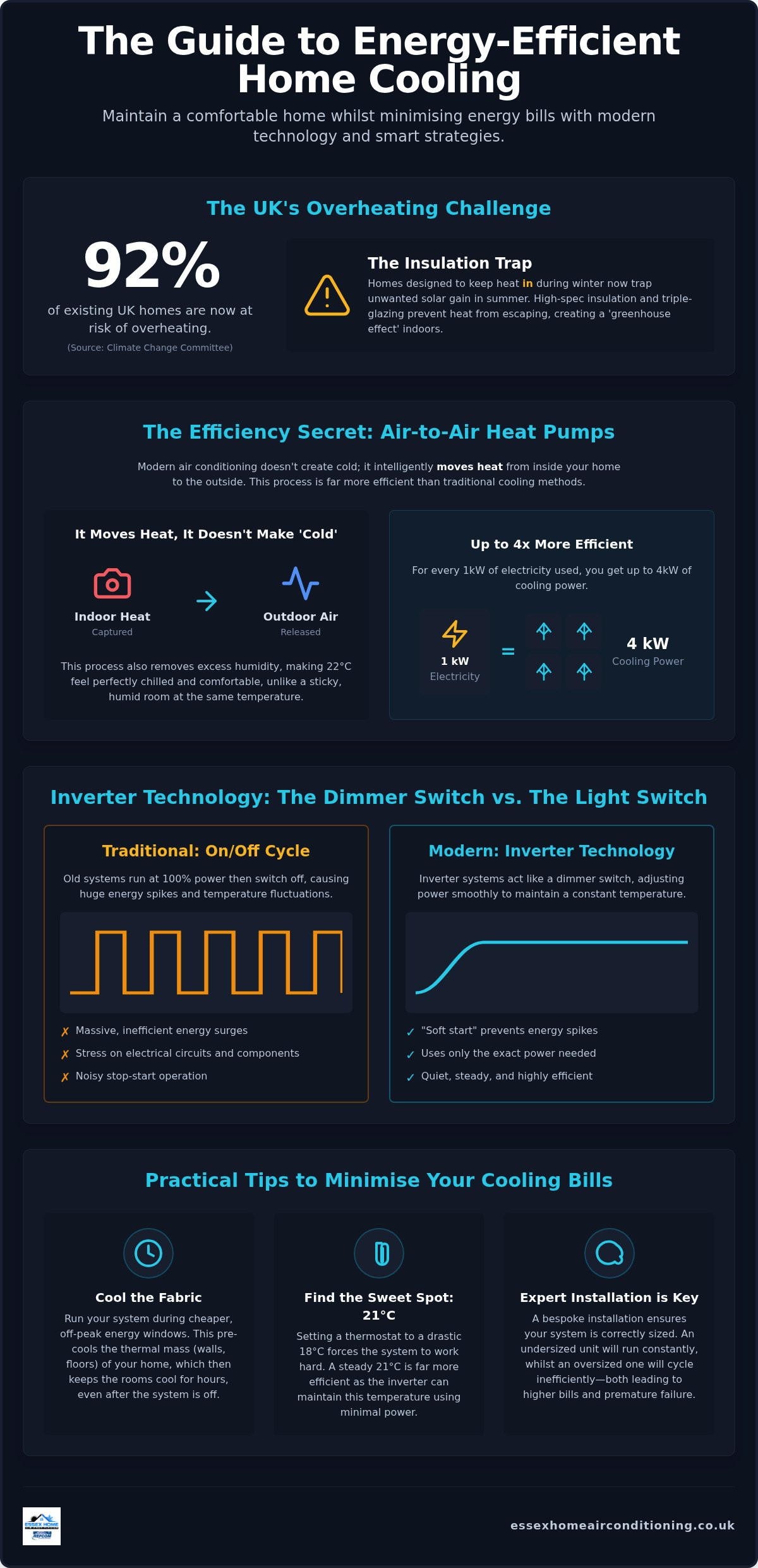
Did you know that the Climate Change Committee estimates 92% of existing UK homes are now at risk of overheating? It's a staggering figure that explains why so many of us feel trapped in stifling, well-insulated boxes as soon as the sun comes out. You've likely spent years improving your insulation to keep the warmth in, only to find it works far too well during a British summer. It's a common frustration. You want energy efficient home cooling that creates a quiet sanctuary, but the fear of "energy-hungry" appliances and soaring bills often keeps the power switched off.
We're here to show you that a perfectly chilled home is a practical reality in 2026. You can maintain a comfortable environment whilst minimising your energy outgoings by using modern technology and clever passive strategies. This guide cuts through the jargon to explain how the latest systems work. We will preview the £2,500 Boiler Upgrade Scheme grants now available for air-to-air heat pumps and help you understand which technology actually keeps your costs down and your comfort levels high.
Table of Contents
The Challenge of Energy Efficient Home Cooling in the UK
Achieving energy efficient home cooling isn't just about turning on a fan and hoping for the best. It's about maintaining a steady, comfortable temperature whilst using the fewest possible kilowatt-hours. In 2026, we've reached a point where British summers are no longer a novelty. They're a consistent challenge for our housing stock. Whether you live in a 1930s brick semi-detached in Southend or a modern apartment in Chelmsford, the way your home reacts to heat is changing. We need a proactive strategy that treats cooling with the same importance as we treat our winter heating.
Traditional Essex properties often rely on thermal mass. Thick brick walls are excellent at staying cool during a short warm spell, but they act like storage heaters during a prolonged heatwave. Once those bricks soak up the sun's energy, they radiate it back into your rooms all night long. This is why many homeowners find their bedrooms are still stifling at 2:00 am, even when the outside air has finally cooled down.
The Problem with Modern Insulation
Many newer Essex builds fall into what we call the "insulation trap." These homes are designed to meet strict efficiency standards that prioritise keeping heat in. Whilst this is brilliant in January, it's a nightmare in July. High-spec wall insulation and triple-glazed windows prevent heat from escaping once it gets inside. Large bifold doors and floor-to-ceiling glazing act like a greenhouse, trapping solar gain within your living space. You might think opening a window is the solution, but during a peak summer day, this often backfires. If the air outside is 28°C, opening the sash just invites that heat directly into your home, making the internal temperature rise even faster.
Humidity and the Comfort Factor
In Essex, 25°C often feels significantly more oppressive than the same temperature in a drier climate. Our proximity to the coast and river estuaries means we deal with high humidity. This moisture in the air prevents your body from cooling itself naturally through evaporation. This is where The Science of Efficiency: Air-to-Air Heat Pumps becomes vital. Modern residential systems don't just lower the temperature; they actively manage moisture levels. Removing humidity from a room makes 22°C feel perfectly chilled, whereas a humid room at the same temperature would feel sticky and uncomfortable. By controlling both heat and water vapour, these systems provide a superior level of comfort without needing to run at maximum power all day.
The Science of Efficiency: Air-to-Air Heat Pumps
Many homeowners are surprised to learn that modern air conditioning is actually an air-to-air heat pump. It is the same technology found in your kitchen fridge, just engineered to manage the climate of your entire living space. It doesn't "create" cold air in the way a heater creates warmth. Instead, it captures heat energy from your rooms and moves it outside. This process is the gold standard for energy efficient home cooling because moving heat is roughly four times more efficient than creating "cold" through traditional methods. For every kilowatt of electricity used, you can get up to four kilowatts of cooling power. It's a clean, tidy way to manage your environment whilst minimising waste.
How Inverter Technology Saves You Money
Old-fashioned systems worked like a light switch. They were either 100% on or completely off. This led to massive energy spikes every time the unit kicked in to lower the temperature by a single degree. Modern systems use variable speed motors and inverter technology, which acts more like a dimmer switch. This allows the compressor to slow down or speed up based on exactly how much cooling you need. The "soft start" benefit prevents the sudden surge in electricity that ruins efficiency and puts stress on your home's electrical circuit. It keeps your rooms at a steady, quiet temperature without the expensive stop-start cycle that wears out components. Inverter technology is a method of adjusting power to match the cooling load exactly.
Decoding SEER and SCOP Ratings
When you're browsing for a new system, you'll see labels for SEER (Seasonal Energy Efficiency Ratio) and SCOP (Seasonal Coefficient of Performance). For 2026, top-tier residential units often carry an A+++ rating, which indicates a SEER of 8.5 or higher. A higher SEER rating means the system is more efficient over an entire cooling season, accounting for the typical UK climate rather than just a single hot day. While a unit with a high SEER might have a slightly higher upfront cost, it typically pays for itself through significantly lower monthly bills. In Essex, where we experience a mix of humid days and milder nights, a system that modulates its performance is a smart, compliant investment. If you aren't sure which rating fits your property, it's worth speaking with a specialist to compare the long-term savings for energy efficient home cooling. This ensures you aren't paying for power you don't need or settling for a system that struggles to keep up.
Comparing Cooling Methods: Which is Truly Efficient?
Fans are often the first thing we reach for during a heatwave, but they don't provide energy efficient home cooling in a technical sense. They move air over your skin to aid evaporation, which feels pleasant, but they don't actually lower the room temperature. In a modern, well-insulated Essex home, a fan eventually becomes a waste of energy. Once the internal temperature climbs, you are simply circulating hot, stagnant air. To truly chill a room, you need a mechanical system that captures heat and moves it outside.
The most common mistake homeowners make is opting for a portable air conditioning unit. These devices require a large, flexible hose to be poked through a gap in a window or door. This creates a fundamental efficiency flaw. As the unit pushes hot air out through the hose, it creates negative pressure inside the room. This vacuum sucks warm air in from under doors, through vents, and around the very window the hose is sticking out of. You are effectively trying to cool your home whilst simultaneously inviting the heat back in. It is a losing battle that results in high electricity bills and mediocre results.
Portable vs. Fixed Split Systems
Fixed wall-mounted split systems are the superior choice for long-term savings. Because the heat exchange happens through small, sealed refrigerant pipes rather than a bulky air hose, your room remains perfectly sealed. This allows your home's insulation to work for you rather than against you. A fixed unit can use up to 50% less energy than a portable unit to achieve the same cooling effect. They are also significantly quieter. This makes them the ideal choice for a home office or a bedroom where a loud, rattling portable unit would be a constant distraction. For a deeper look at these systems, see our Wall mounted air conditioning for homes: 2026 Guide.
The ROI of Professional Installation
True efficiency depends on correct sizing. A system that is too small will run constantly at maximum power, whilst a system that is too large will "short-cycle," turning on and off rapidly. Both scenarios lead to unnecessary energy waste and premature part failure. A professional installation ensures your system is designed specifically for your room's dimensions and glazing levels.
In Essex, we often see DIY attempts that lead to refrigerant leaks. Using an F-Gas certified installer is a legal requirement for a reason. It ensures the system is gas-tight and compliant with safety standards. A tidy, well-planned setup from a local specialist doesn't just look better; it operates at the peak performance levels the manufacturer intended. This methodical approach is the only way to guarantee energy efficient home cooling that lasts for decades rather than just a few summers.
Practical Tips to Minimise Your Cooling Bills
Owning the right technology is only half the battle. How you operate your system day-to-day determines whether you achieve true energy efficient home cooling or end up with a nasty surprise on your electricity bill. Many homeowners treat their thermostat like a car accelerator, pushing it to 16°C in the hope of cooling the room faster. This is a myth. Your system delivers the same cooling power regardless of the target. By setting it to a sensible 21°C, you allow the unit to reach a comfortable level and then modulate its power down, preventing the compressor from running at maximum capacity for longer than necessary.
You should also consider the "Cool the Fabric" strategy. If you are on a variable energy tariff, run your system during the early morning when electricity is cheaper and the outside air is cooler. This pre-cools the thermal mass of your walls and furniture. When the afternoon sun hits, your home already has a "reserve" of coolness, meaning the system has far less work to do. Additionally, don't neglect basic maintenance. A layer of dust on your internal filters forces the fan to work harder, which can add 15% to your running costs. It is a tidy, five-minute job to hoover them out once a month to keep everything running smoothly.
Smart Controls and Scheduling
App-based controls are a brilliant tool for commuters. If you are travelling back to Basildon or Brentwood, you can trigger your system ten minutes before you arrive. This prevents the need to run the unit on a high-power setting to combat a house that has been baking all day. Integrating these controls with a home energy monitor allows you to see exactly what you are spending in real-time. For those who spend their day working from home, our Quiet Air Conditioning for Home Office: 2026 Guide provides specific tips on balancing productivity with low energy use.
Passive Synergy: Blinds and Ventilation
Mechanical systems work best when paired with passive habits. In south-facing Essex lounges, keep your blinds or curtains closed during the peak of the day. This simple act blocks the solar gain that would otherwise force your system to work overtime. Whilst some guides suggest leaving windows open at night, this is often a security risk for ground-floor rooms. Instead, use your system's "Fan Only" mode in the evening. It provides low-energy air circulation without the cost of running the compressor. If you want to ensure your home is set up for maximum efficiency, you can book a professional survey with our local team to discuss a bespoke cooling plan.
Why Expert Essex Installation is the Ultimate Efficiency Win
Choosing the highest-rated hardware is only the first step. You can buy the most advanced system on the market, but if it is poorly positioned or incorrectly sized, your energy efficient home cooling goals will remain out of reach. This is where the role of a local specialist becomes vital. We don't believe in "one size fits all" solutions because every property in our county presents a different thermal challenge. A generic installation often leads to higher energy bills, noisy operation, and eventual system failure because the unit is constantly fighting against the room's natural layout.
Bespoke Design for Essex Properties
A period home in Billericay with solid brick walls requires a completely different approach to a modern, glass-fronted apartment in Southend. We take the time to calculate the exact British Thermal Units (BTU) required for your specific space. This methodical calculation accounts for window orientation, ceiling height, and even the number of occupants. Getting this right from the start ensures your system reaches the target temperature quickly and then drops into its most efficient, low-power mode. For a deeper look at the process, you can read our Air Conditioning Installation in Essex: The Complete 2026 Homeowner’s Guide.
Long-term Efficiency through Servicing
Maintaining energy efficient home cooling is an ongoing commitment. An annual service is the best way to protect your unit's SEER rating and ensure it isn't overworking. During a professional visit, we check refrigerant levels and clean the internal coils. Even a tiny leak or a slight buildup of grime on the outdoor heat exchanger can force the compressor to work harder than necessary. This isn't just about avoiding breakdowns; it's about keeping your running costs as low as possible for the life of the system. Our Air Conditioning Servicing Southend: The 2026 Homeowner’s Maintenance Guide explains exactly what we look for to keep your setup in peak condition.
Ultimately, a professional install provides peace of mind. We take pride in a tidy, F-Gas compliant finish that respects your home. With over 20 years of trade experience, Oliver and the team focus on doing things the right way, without cutting corners. You get a quiet, reliable environment and a system that actually delivers on its efficiency promises. It is about transparency, local accountability, and ensuring your home remains a sanctuary even during the hottest Essex summers.
Ready for a Cooler, More Efficient Summer?
Achieving a comfortable home environment shouldn't feel like a choice between sweltering heat and sky-high energy bills. By combining passive strategies like solar shading with the latest inverter technology, you can enjoy a perfectly chilled sanctuary all summer long. Remember that the secret to energy efficient home cooling lies in the quality of the installation and the methodical sizing of the system to your specific Essex property.
We take pride in doing things the right way. With over 20 years of trade experience and full F-Gas certification, we specialise in tidy, residential-only setups that look as good as they perform. You don't have to navigate technical jargon or worry about messy pipework. We focus on providing a "safe pair of hands" for homeowners from Chelmsford to Southend, ensuring your cooling system is compliant, safe, and whisper-quiet.
If you are ready to transform your living space, request a free, no-obligation quote for energy efficient cooling in Essex today. Let's make sure your home stays a refreshing retreat, no matter how high the temperature climbs outside.
Frequently Asked Questions
Is air conditioning expensive to run in the UK in 2026?
Modern systems are surprisingly affordable to operate. With the average electricity rate at 26.11p per kWh in late 2026, an A+++ rated inverter system costs a fraction of what older models used. Because these units modulate their power, they don't run at full capacity for long. You'll find that maintaining a steady temperature is far cheaper than letting a house overheat and then trying to chill it rapidly.
What is the most energy efficient way to cool a house?
The most energy efficient home cooling strategy is a "passive-first" approach paired with an air-to-air heat pump. Start by using external blinds to block solar gain during the day. Then, use a fixed split system to manage the remaining heat. Moving heat energy is roughly four times more efficient than creating cooling through traditional methods. This dual approach ensures your home stays chilled whilst your electricity meter stays low.
Are portable air conditioners more efficient than fixed units?
Portable units are almost always less efficient than fixed split systems. The hose used to vent hot air requires an open window or door, which allows warm air to leak back inside. This creates a cycle where the unit struggles to keep up with the heat gain. A fixed, wall-mounted installation is sealed and uses a dedicated heat exchanger, often resulting in energy savings of up to 50% compared to portable alternatives.
How much does it cost to run a bedroom air con unit for a night?
Running a modern bedroom unit for eight hours typically uses very little electricity. Once the room reaches your target temperature, an inverter unit might only draw 200 to 300 watts to maintain it. Based on the current 26.11p per kWh rate, this often equates to less than the price of a takeaway coffee for a full week of comfortable sleep. It's a small price for a quiet, restive environment.
Does solar power work well with home air conditioning?
Solar PV and air conditioning are a perfect match. Your solar panels generate the most electricity when the sun is at its strongest, which is exactly when your cooling demand is highest. This allows you to run your system for free during the day. Many Essex homeowners use this "free" energy to pre-cool their homes, reducing the load on the grid during more expensive evening periods when the sun goes down.
What SEER rating should I look for in a new home cooling system?
In 2026, you should aim for a system with a SEER rating of at least 8.5, which typically carries an A+++ efficiency label. This Seasonal Energy Efficiency Ratio measures how the unit performs across a typical UK summer, not just on the hottest day. Higher ratings mean the internal components are more advanced, allowing the system to modulate its power more effectively and reduce your long-term running costs significantly.
Can air conditioning also help with home heating efficiency?
Yes, wall-mounted split systems are actually highly efficient heaters. They work as air-to-air heat pumps, extracting warmth from the outside air even in winter. From April 2026, the Boiler Upgrade Scheme offers a £2,500 grant for these setups. This makes them a versatile investment for year-round comfort, providing low-carbon heating that is often cheaper to run than a traditional gas boiler or older electric radiators.
How often should I service my unit to maintain its energy efficiency?
You should arrange a professional service at least once a year. Dust and debris on the internal filters or the external heat exchanger force the fan and compressor to work harder, which can increase your energy consumption by 15%. A tidy, well-maintained system stays gas-tight and operates at its original factory efficiency. Regular checks also ensure your system remains F-Gas compliant and safe for long-term use in your home.


Comments